



Quick verdict: Loudly is strongest as a broad browser-based music workflow: parameter or text generation, remixing, stem extraction, samples, distribution, and a public API. Its main trade-off is licensing complexity, not a lack of tools. Read the exact project and subscription rules before using its catalogue at scale.
Editorial disclosure and method: Enkio publishes this review and offers AI music and music-video tools. This is a desk-research review of Loudly, updated October 13, 2026. We checked the Loudly AI Music Generator, Loudly FAQ, Loudly License Agreement, Loudly Music API, and Loudly pricing.
What is the Loudly AI music generator?
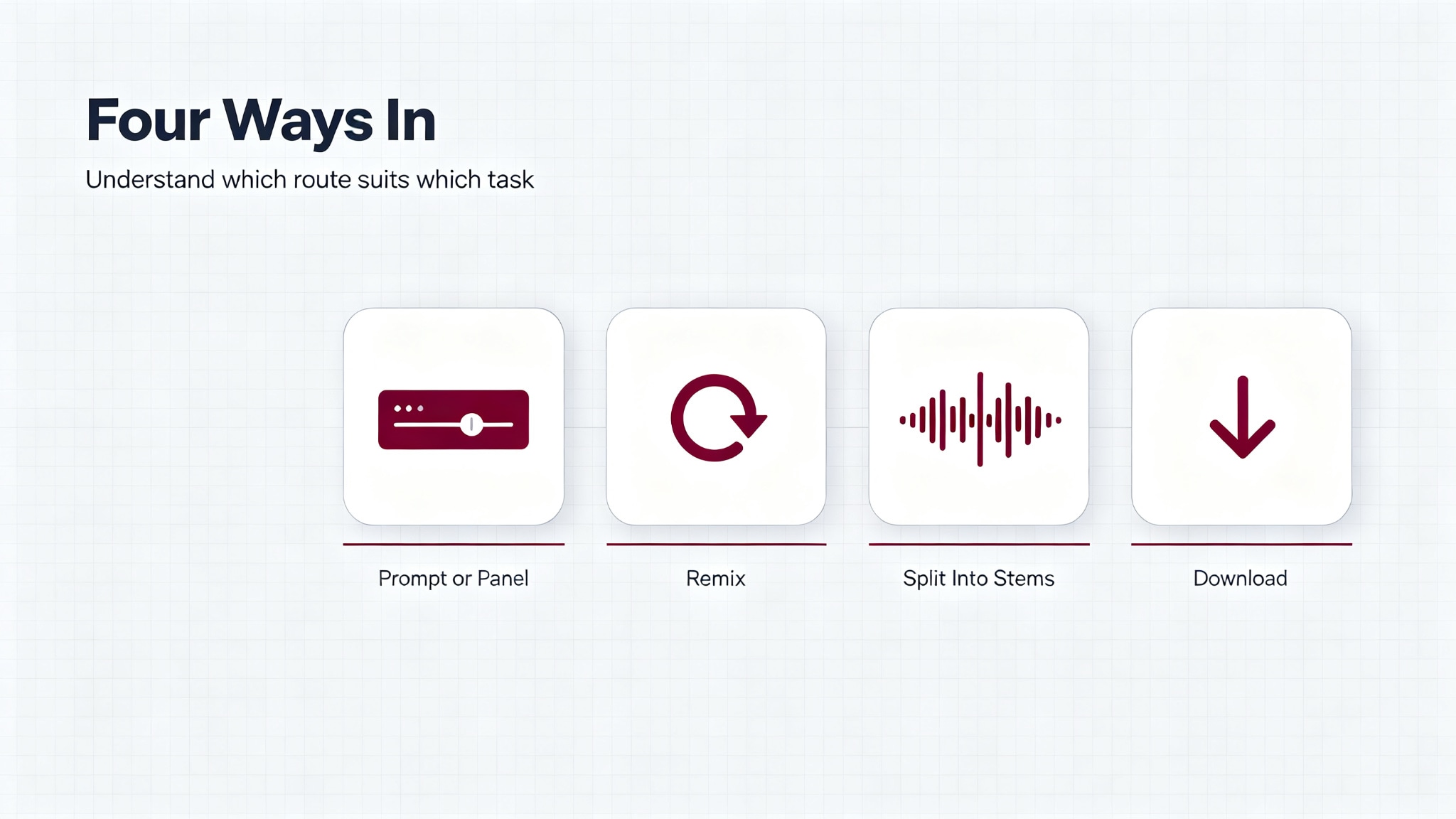
Loudly is an online AI music platform for generating and reshaping tracks. The consumer product includes a parameter-based Music Generator, text-to-music, a remixer, samples, and stem tools. The company also operates music distribution and exposes a separate enterprise API.
The platform is not a DAW: it produces or transforms material that can then move into a DAW or video editor. That boundary is useful because it explains Loudly's best use case—fast, licensable source material for content and product workflows—without promising the precision of a multitrack production session.
| Need | Loudly Route | What We Check |
|---|---|---|
| Fast background track | Text-to-music or Music Generator | Duration, download format, and project licence |
| More deterministic control | Genre, energy, tempo, key, structure, and instrumentation controls | A parameter is guidance, not a guarantee of a specific composition |
| Edit an existing track | Remixer or stem splitter | You must hold the rights to uploaded audio |
| Music inside a product | Music API | Separate enterprise pricing and licence scope |
| Release to streaming | Loudly Distribution | The FAQ says catalogue distribution must use Loudly's service |
How Loudly works
Generate from text or parameters
Text-to-music is the quicker route when the brief is descriptive. The Music Generator is better when tempo, key, energy, structure, and instrumentation must be constrained before generation. Loudly says its generator returns multiple options quickly; treat the speed statement as a vendor claim rather than an independent benchmark.
Remix or split material you can legally upload
The remixer changes the treatment of an uploaded track, while the stem splitter separates elements such as vocals, drums, bass, and instruments. The official FAQ lists common inputs including MP3, WAV, and M4A and outputs in WAV or MP3. Rights to the source audio remain the user's responsibility.
Download or distribute under the correct licence
Do not treat “royalty-free” as a synonym for ownership or unlimited use. Loudly retains copyright in its content and grants subscribers defined usage rights. Catalogue tracks cannot be repackaged as standalone stock, and the 2026 agreement lists additional restrictions for broadcast, streaming, client work, Content ID, and large enterprises.
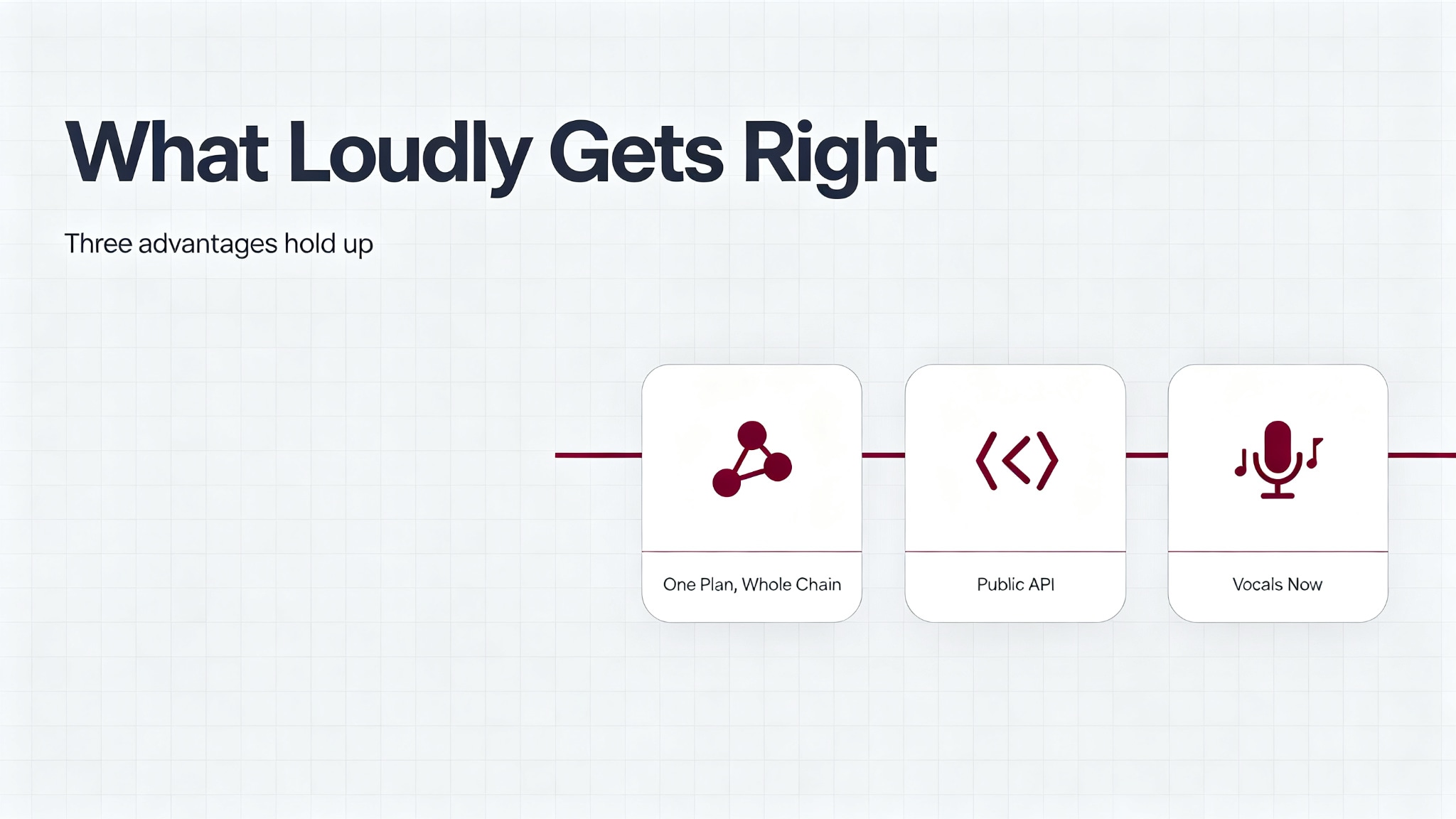
What Loudly gets right
A broad creation-to-delivery chain
Generation, remixing, stems, samples, and distribution are available within the same ecosystem. That breadth is useful for content teams that otherwise need several subscriptions to move from brief to edit-ready audio.
A documented public API
The API is Loudly's clearest differentiator. It covers text and parameter generation, instrument stems, playlists, catalogue access, and lossless WAV delivery. The API page promises enterprise commercial coverage, perpetual licensing, and volume pricing for API use; those claims apply to the API agreement, not automatically to a consumer subscription.
Licence documentation with concrete boundaries
The licence is complex, but it is specific. The agreement identifies prohibited uses, enterprise thresholds, client sublicensing conditions, streaming-distribution rules, and the treatment of uploaded audio. That is more useful than a generic “copyright-safe” label.
Loudly pricing and licence decisions
Loudly offers Free, Personal, and Pro consumer plans, while API and large-enterprise arrangements are priced separately. Because plan prices and allowances can change, use Loudly pricing for the current numbers.
| Question | What the official material says | Decision |
|---|---|---|
| Is commercial use included? | Paid plans provide commercial project rights within the agreement | Check whether the specific channel, client, ad spend, or enterprise size is covered |
| Do I own the track? | Loudly retains copyright and grants usage rights | Do not sell the audio as standalone stock or claim unrestricted ownership |
| Can I publish to Spotify? | Loudly directs distribution through its own Distribution service | Do not upload catalogue content independently unless the current agreement permits it |
| What survives cancellation? | Previously completed and published projects remain covered; new uses are treated differently | Archive the licence and publication date for each project |
Real limitations
Consumer licensing is narrower than the marketing shorthand
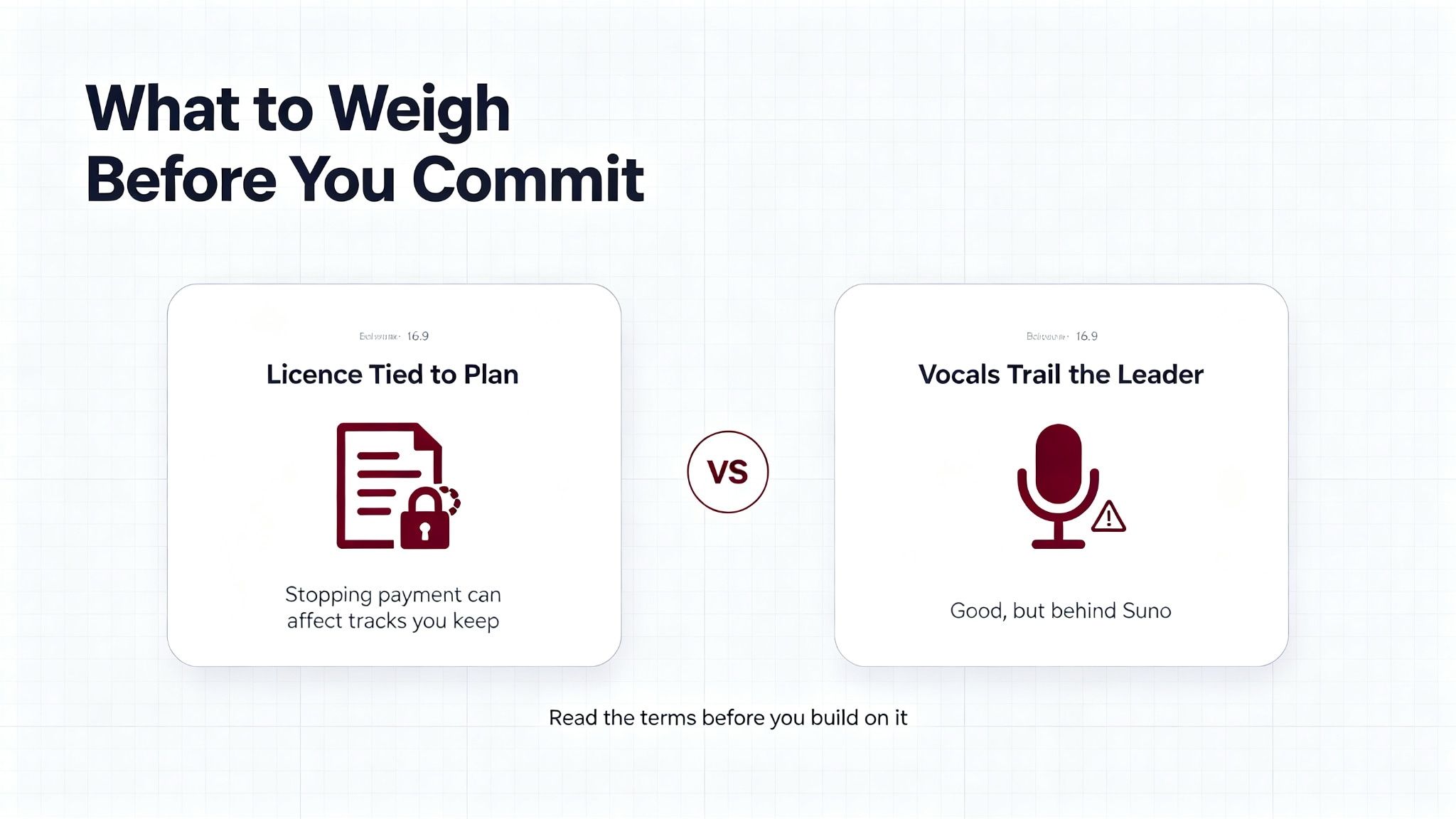
The phrase “100% royalty-free” is easy to overread. The agreement restricts certain broadcast and streaming uses, standalone resale, Content ID, and some enterprise use cases. Large publishers and companies above the stated thresholds need a custom licence.
Partner output can follow different rules
The 2026 agreement distinguishes Loudly Output from Partner Output and names Mureka.ai as an example of an integrated third-party service. When a feature is supplied by a partner, confirm the output type and applicable terms rather than assuming every result follows the same licence.
No controlled vocal-quality conclusion
The original article compared Loudly's singing to category leaders without a reproducible test or a clear official product boundary. This version removes that ranking. Buyers who need generated lead vocals should verify the current feature inside their account and run the same lyric, genre, and duration test across shortlisted tools.
Who should use Loudly?
Best fit: content teams that need instrumental music and stems, developers that need an API, and creators willing to publish within Loudly's documented licence and distribution workflow.
Weaker fit: buyers who require exclusive copyright, independent catalogue distribution, unrestricted client sublicensing, or a simple “use anywhere forever” consumer licence.
Give a finished track a visual
Use the full mix or a stem-led edit as the starting point for a dedicated music-video workflow.
Frequently asked questions
Is Loudly free to use?
Loudly offers a free plan for evaluation, but the vendor limits free-track duration and paid plans govern broader downloads and commercial use. Check Loudly pricing for the current allowance rather than relying on a fixed number quoted in an older review.
Can I use Loudly music commercially?
Paid subscribers receive a non-exclusive licence for defined commercial projects, but important restrictions remain. The Loudly License Agreement limits some broadcast, streaming, resale, Content ID, client, and large-enterprise uses, so match the licence to the project before publishing.
What happens to Loudly projects after I cancel?
The Loudly FAQ says completed projects created and published while a paid subscription was active remain covered, while downloaded music used after cancellation is limited differently and new projects are not covered by the old subscription. Preserve the project date and licence record.
Does Loudly have an API?
Yes. The Loudly Music API documents text-to-music, parameter-based generation, stems, playlists, catalogue access, and enterprise licensing. API terms and pricing are separate from the consumer plan.
Does Loudly generate vocals?
Loudly clearly documents instrumental generation, remixing, samples, stems, and distribution. Its 2026 licence also defines third-party Partner Output, including output returned by integrated services. If a vocal option appears in your account, verify whether it is native or partner-provided and which terms apply; this review does not label Loudly a native vocal leader without that evidence.
Conclusion
Loudly earns attention for workflow breadth and API access. The responsible buying decision turns on the licence: identify whether the output is Loudly or partner content, match the plan to the project, and document when the project was completed and published.