



Who it's for: hosts, haunters and video makers who want classical halloween music to do the scaring — pipe organ, tolling bells, trembling strings, a dance that keeps speeding up.
Basis for the steps below: a hands-on run on October, 2026, in which we generated Halloween songs on Enkio and walked the full song-to-video workflow end to end; the recipes here are composition guidance applied inside that workflow.
Start with the organ. Describe the rest.
Open the music generator and write your orchestra into the description box.
How to Generate a Classical Halloween Track with Enkio
Halloween classical music succeeds or fails on the description. Ask for "something classical" and you get a pleasant string pad; name the instruments and their jobs, and the result carries real dread. It is also forgiving to generate: its effects are timbral, living in instrument choices and pacing, not in lyrics you must write and check.
Step 1: Describe the orchestra, not the era
Open the AI Music Generator and write the description the way an orchestrator would: instrument, register, role. "Low pipe organ chords, a distant bell tolling between phrases, strings trembling on one high note" tells the generator more than "spooky classical music" ever will. Descriptions that name instruments give it a piece to build; mood-only descriptions tend to come back as background.
A starting point worth copying: "Slow pipe organ chords in a minor key, tolling bells between the phrases, tremolo strings underneath, no voices."
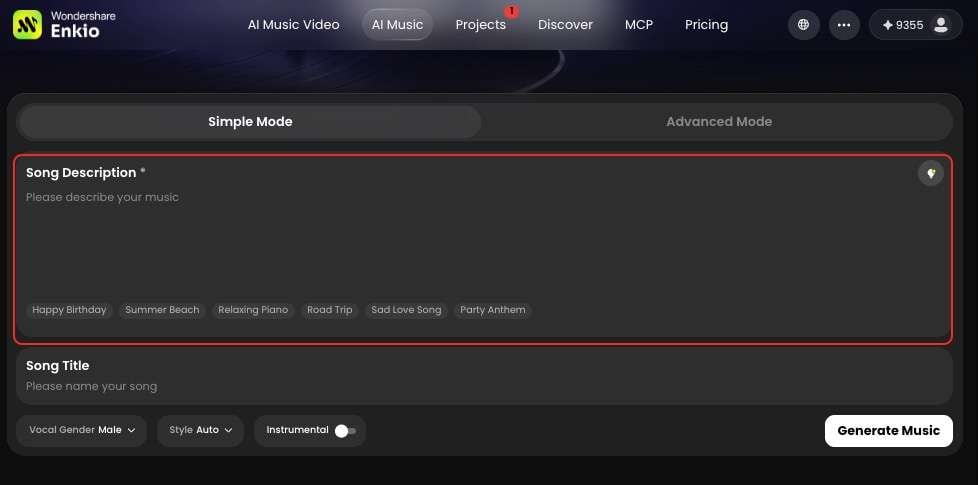
Step 2: Leave the voices out
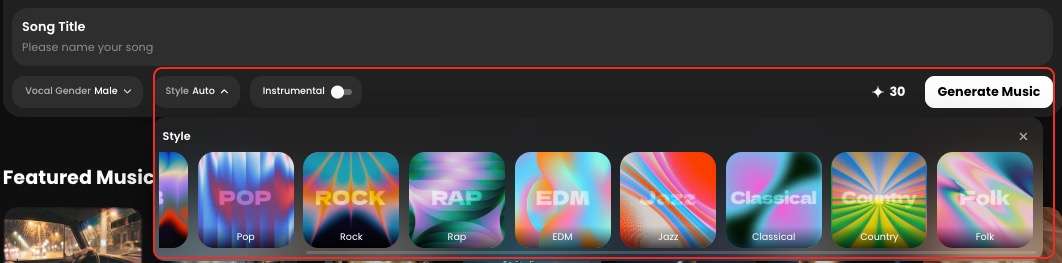
Classical Halloween pieces are instrumental, and Enkio supports instrumental generation — no lyrics to write, approve or check. Pick a style from the generator's list, or leave the style and vocal gender unset and let Enkio match them to your description — for an orchestral request, Step 1's instrument list does more work than the style label.
Step 3: Generate, preview in full, download the MP3
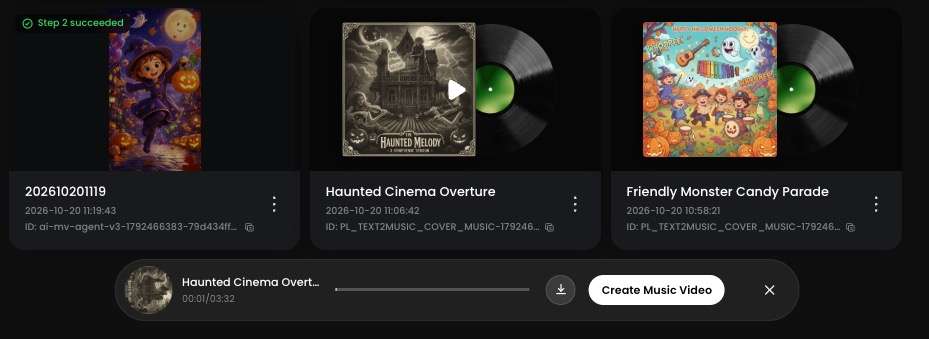
Press Generate music and follow the job in Projects; the finished track arrives with an album cover attached, ready to play or download as an MP3. Preview the whole track first — an arc only proves itself at full length, and a weak ending is easier to fix by sharpening the description's final sentence and regenerating than by editing audio. Keep the cover image: it becomes the starting frame if this track gets a video.
Prompt Tips From the Masters for Your Classic Halloween Music
You do not need the famous recordings themselves; you need the moves inside them. We read the four pieces below as recipes, not as a playlist. Classic halloween music runs on a handful of repeatable devices, and classical music halloween playlists keep returning to these four because each is essentially a single device executed perfectly. Borrow the device, phrase it in your own words, and the track stays yours.
Danse Macabre — the dancing fiddle
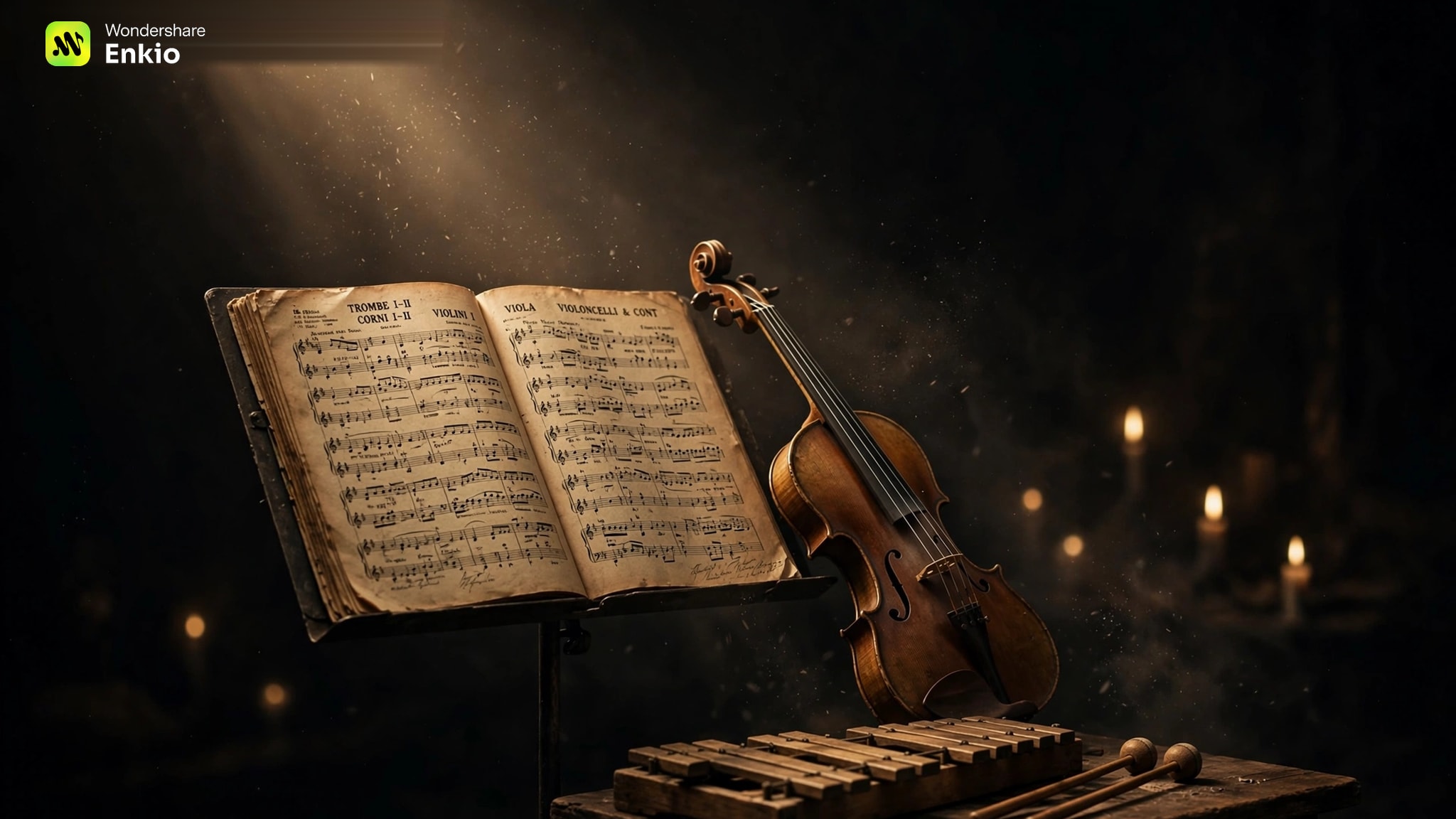
Camille Saint-Saëns wrote Danse Macabre in 1874, a tone poem in which Death calls skeletons from their graves at midnight to dance. Death plays the solo violin himself, and the xylophone rattles underneath as the sound of bones. Borrow the pairing — one solo instrument leading a dance it should not be leading, with a dry, bony ticking under it: "A solo violin leads a slow waltz; add a dry wooden tapping, like bones, on every beat."
Night on Bald Mountain — the build that never lets up
Modest Mussorgsky finished Night on Bald Mountain in 1867, picturing a witches' sabbath; the version most listeners know is Rimsky-Korsakov's arrangement of 1886, and its Fantasia sequence in 1940 fixed the piece in the Halloween canon. The device is accumulation — brass and percussion enter layer over layer, with no resting place offered. Borrow it directly:
"Start with low strings and a single drum; keep adding brass and percussion, layer over layer, and do not let the energy drop until the final chord."
Toccata and Fugue in D Minor — the organ shorthand
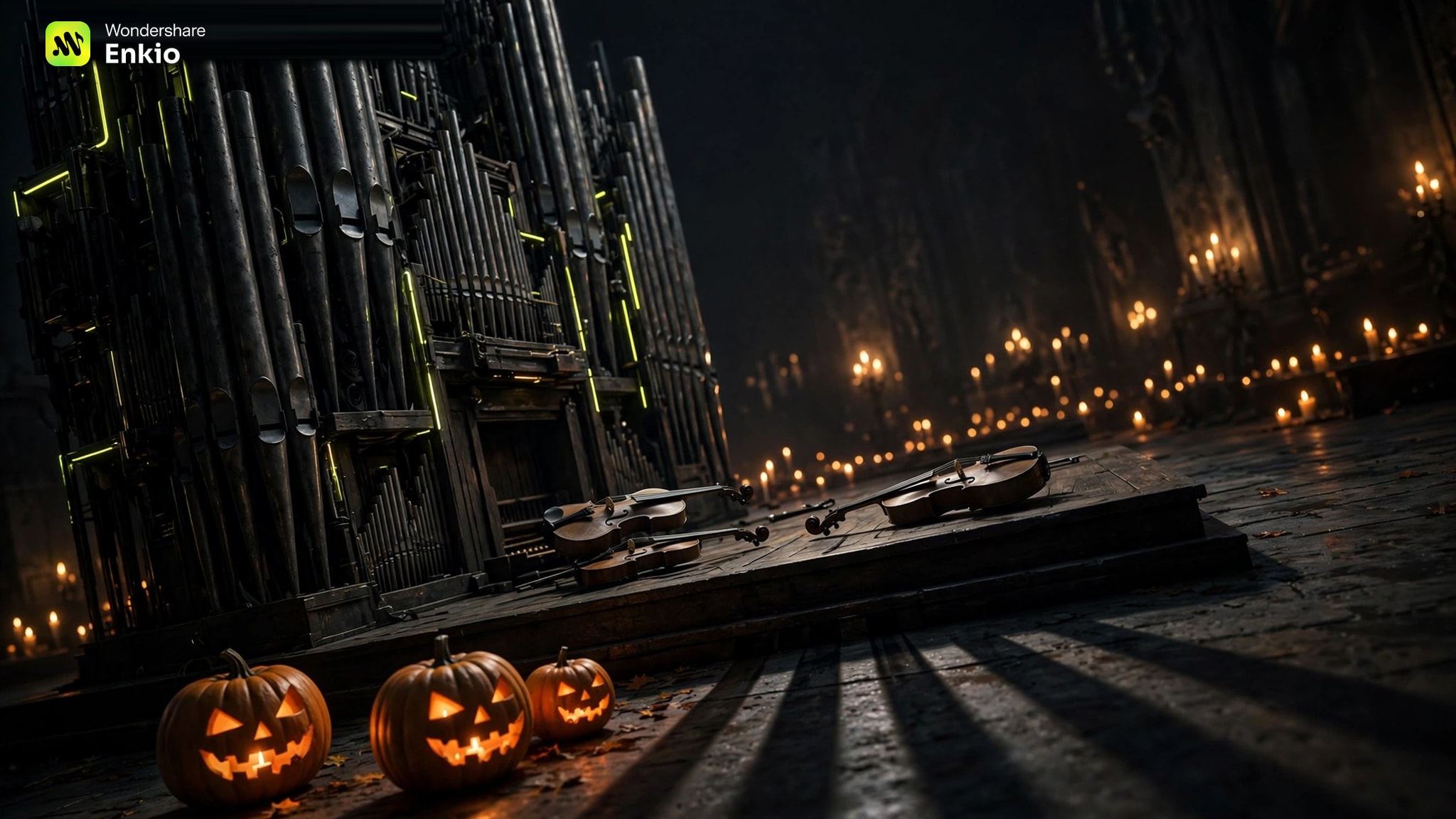
The Toccata and Fugue in D Minor, BWV 565, is attributed to Bach — scholars still debate the attribution — and its opening is the fastest shorthand in classical music: a few descending organ flourishes, and every listener knows a haunted house is nearby. The device is the announcement: one instrument stating the theme alone, at full weight, before anything else plays. In a description:
"Open with a lone pipe organ, low chords stated one at a time, nothing else playing."
In the Hall of the Mountain King — the creep that accelerates
Edvard Grieg wrote In the Hall of the Mountain King in 1875 as incidental music for Ibsen's play Peer Gynt. One creeping theme does all the work: it repeats, and every repeat is a little faster and a little louder, until the creep turns into a chase. The simplest arc in this article, and the easiest to describe:
"Repeat one short, creeping melody over and over; each repeat slightly faster and louder, ending in a frantic rush."
Where Your Generated Classical Track Works
Classical music for halloween earns its keep where a song with lyrics would fight the scene: no singer competes with conversation, and the dread can sit at background level for hours. Two uses cover most of what these tracks get generated for.
Haunted décor and party background
A generated orchestral track runs under a haunted-house room or a party without a vocal line competing for attention, and because you set the arc yourself, you can order a slow-burn version for early evening and a frantic one for the late crowd. If your scene needs atmosphere more than orchestra — creaks, wind, a door that will not stay shut — our Spooky Halloween Music guide builds those sound beds instead.
Under a horror video or MV
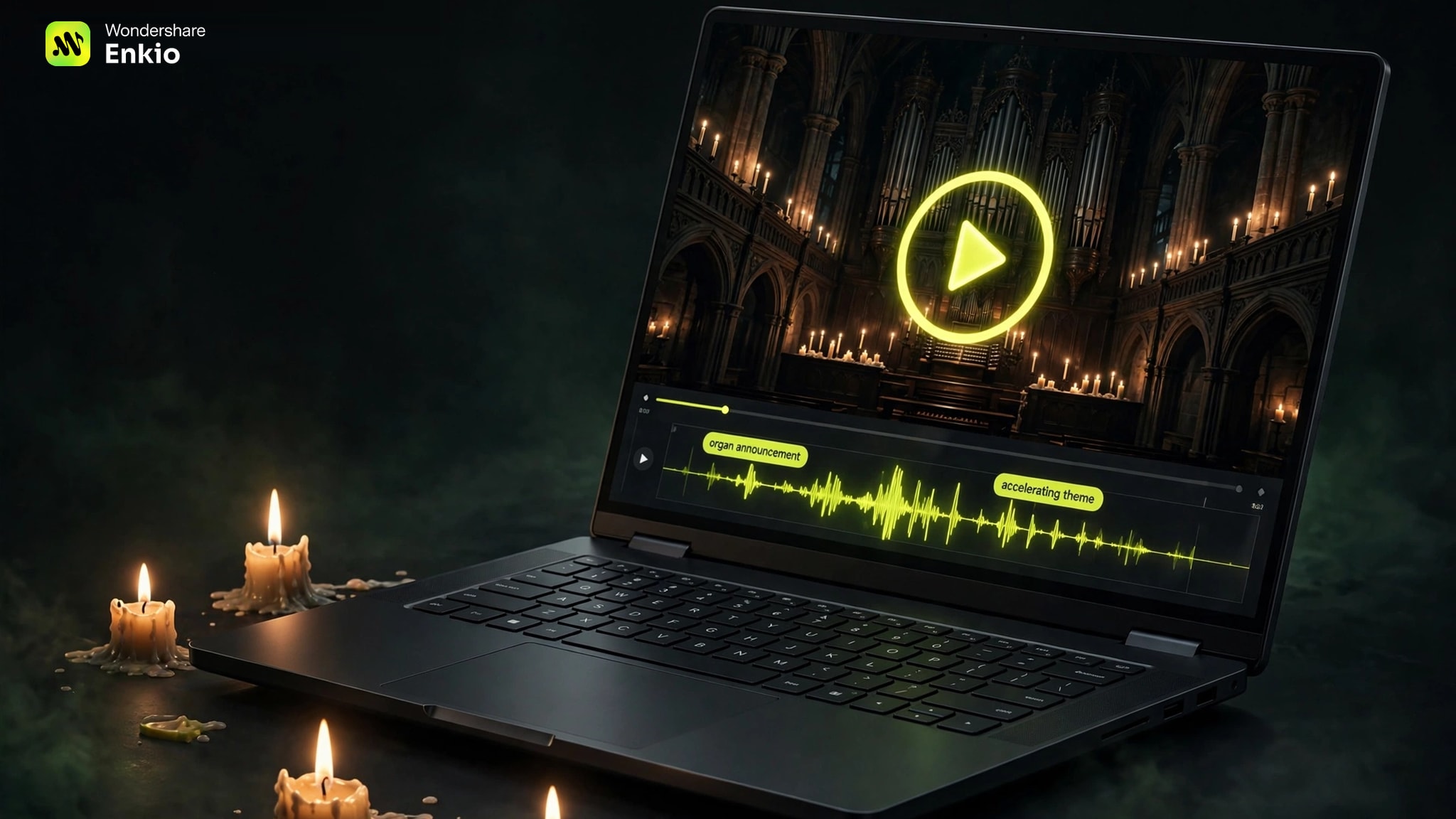
Under picture, the same track becomes a score: the organ announcement covers a title card, the accelerating theme covers a chase. The AI Music Video Generator takes the track you generated, cover image included, and builds the video around it; our Halloween Music Videos guide walks through that full workflow.
Give your track a haunted house to haunt.
Your generated track and its cover are ready — turn them into a music video.
Check the plans before the season starts.
Credits, downloads and plan differences are listed on the official pricing page.
Frequently asked questions
What is the scariest classical piece ever written?
There is no settled answer — the polls and programme notes we read split the same way, because "scary" means two things: dread (slow, quiet, wrong-feeling) and shock (loud, sudden, violent). Listeners who prefer dread usually reach for the organ repertoire, with the Toccata and Fugue in D Minor named most often; listeners who prefer shock point to pieces built on massed brass and percussion. It is a taste question — which is why generating your own helps: you choose which kind of scary your scene gets.
Why is the organ linked to haunted houses?
Partly architecture: pipe organs live in churches and old halls, their pipes hidden behind walls, so the sound seems to come from the building itself. Partly cinema: early horror films leaned on organ music for haunted houses and their organists, and decades of repetition made the association a reflex. The low register helps — the deepest organ notes are felt through the floor as much as heard.
Can I use my generated classical-style track in a school concert video?
It depends on how the video will be used and shared, so check the current terms before you publish it: for commercial usage terms, see Enkio's Terms of Use. For everything around the concert — background tracks for lessons, the class party — our Halloween Music for Classroom guide runs the same workflow in a classroom setting.
What's the difference between a classical Halloween track and a horror film score?
A film score is written to a picture: it follows cuts, lands on specific frames, and often uses sound design that is not music at all. A classical Halloween track is a standalone piece with its own arc — it must hold a room unaided. That is also why one generated track can move between jobs — décor, party and video all take the same piece as it is.
Can I generate a piece in the style of a specific living composer?
Describe the sound, not the person. Naming a living composer asks for an imitation of an identifiable artist's style, which sits in an IP grey area — and it is a weak brief besides, because "tremolo strings under a tolling bell" tells a generator more than any name does. Era, instrumentation, pacing and mood are specific, safe and effective — and every device above can be reused without borrowing anyone's identity.
Conclusion
One evening is enough: describe the orchestra, set the arc, borrow a single device from the masters, and the track is yours to loop under a scene, cut under a video, or regenerate next October. If what you actually need is one specific famous performance — a particular organist's Toccata — generation is the wrong tool; license that recording instead. One rights note to end on: the compositions above sit in the public domain, but that does not make modern recordings of them free to use. For your own generated track, check the current terms before you rely on it — our Free Halloween Music guide works through the same rights questions for tracks you find rather than generate.